Archive

Archive for the ‘Generator news’ Category

Advantages of Low RPM Generator

October 20th, 2011 aboutgenerator Comments off

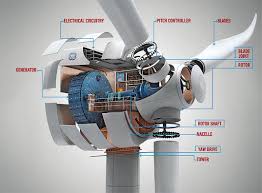
Traditional generators need to revolve at 1800 revolutions per minute to generate power. This requires a great expenditure of energy to produce a feasible amount of power. With low RPM generators, there is the advantage of power production at low revolutions per minute. The low RPM generator starts producing power at a single RPM. There are several advantages associated with a low RPM generator in terms of performance, reliability and life of the equipment. The low rpm permanent magnet generator uses powerful neodymium magnets that create a permanent magnetic field around the conducting coils. Here are some advantages of low RPM generators:

advantages-of-low-rpm-generator

Low cost: These generators not only provide higher efficiency than traditional alternators but they also have low cost structures reducing upfront capital costs. The lower weight compared to DC generators reduces the cost of materials.

Low maintenance: The permanent magnet generators don’t require extensive maintenance as these are designed to operate in an optimum manner. The neodymium magnets used in these generators have a high working temperature which ensures that these magnets will not demagnetize very soon and continue to provide services for a long time to come.

Reliable Power Output: The permanent magnet generators are a highly reliable source of power as they work at low speeds which leads to less wear and tear of various parts of the generators. As there are no slip rings used in these generators, these are simple to maintain and ideal for power production for a longer duration of time.

Simple Design: These generators have a simple design which makes it easy to produce them and also helps in proper maintenance and repairs in future.

Different Sizes: These generators are available in different sizes and capacities that allow users to choose one that meets their requirements and budget. Whether a permanent magnet generator is coupled with a wind turbine for a small business facility or for power needs of a small house, these generators are perfect for all applications.

Categories: Generator news Tags:

Magnetic Generator: Great For Scrap Yards

October 20th, 2011 aboutgenerator Comments off

 all units to serve an increased level of safety. This has been an issue in the past, where lives of workers were put in danger. Although, with the quality of power these machines have, these units are more durable and potential hazards such as power failure will no longer be a problem in the field.

magnetic-generator

Units like these are built ergonomically, making it easy to manoeuvre the machine on the yard. These are very easy to attach to working equipment, and the pilot has full view of the equipment. Something like this holds an immense load of power, and knowing how to operate it is crucial.

A magnetic generator is ideal for working with scrap metal in terms of hauling and moving. Something like this is safer than the traditional equipment. When in need of metal lifting, getting a piece of equipment like this is the sure way to go.

Categories: Generator news Tags:

New Tc-99m Advanced Technetium Generator Introduced

September 28th, 2011 aboutgenerator Comments off

new-tc-99m-advanced-technetium-generator-introduced

The need for diagnosing potentially diseased organs using safe and technologically advanced methods has been a challenge for medical science for decades. Now a new Tc-99m generator has been put on the market that promises to be the radiation diagnostic device for which patients and medical personnel have needed so urgently.

What is the Tc-99m generator?

Technetium-99m is a man-made radioactive isotope manufactured from the element technetium. Favored by the medical community because it releases small amounts of radiation to the patient, it is used to image internal body organs. With a half-life of only six hours, it does not cause radiation damage.

What are the uses of the Tc-99m generator?

The Tc-99m generator is an imaging device used to determine whether a particular part of the body is diseased. A diagnostic nuclear medical procedure, the Tc-99m is used to scan kidneys, heart, lungs, brain, lymph nodes, thyroid glands, salivary glands, placentas, blood pooling, nasolacrimal drainage systems, urinary bladder, liver, spleen, bone-marrow, and bone, to name just a few.

What is the procedure when using the Tc-99m generator?

The procedure using the Tc-99m generator is not difficult. Using a bone scan as an example, the patient is first injected with the radioactive dye through an intravenous line (IV). Usually, after two or three hours, (to allow time for the compound to localize) the patient is scanned. Any problem areas will show up where the radioactive marker is concentrated. These are known as “hot spots”.

What are the benefits of the Tc-99m generator?

The advanced technology of the Tc-99m generator offers many benefits to physicians, nurses, and radiology technicians.

• Whenever using a radiological diagnostic apparatus, the safety of the medical staff is essential. The Tc-99m generator, designed to provide enhanced radiation protection, offers either a tungsten or lead shield. This assists in decreasing exposure to occupational staff.
• The Tc-99m generator delivers a stable and safe supply of radioactive isotopes with great flexibility.
• Medical facilities can order generators that meet their requirements - anywhere from 0.2 curies to 5 curies.
• The calibration date is easily adjustable to meet the needs of medical personnel.

Radiation technology has advanced tremendously over the years and the Tc-99m generator is the proof. Relying on advanced medical science, patients can be assured of the best diagnostic equipment on the market today. Medical personnel can be assured that while attending to their patients, they will be successfully shielded from any excess radiological particles, thus insuring their long-range health.

Categories: Generator news Tags:

Bicycle Generator: How to Be Safe

September 28th, 2011 aboutgenerator Comments off

bicycle-generator

If you’re a lover of bicycles, you without doubt know all about bicycle generators. If you ought to make your own bicycle generator, maybe you are wondering what parts will likely be required. Well, in other words, you will undoubtedly have to have a stand, a bicycle, and a generator, and this is going to prove the most beneficial for a simple type of exhibition. According to a number of elements, the electrical output will drastically vary, and one of those elements is how fast you are actually pedaling the bicycle. A DC generator is the best possible generator to work with with a bicycle.

You will be able to use a setup that requires a stand, a generator, batteries, a power inverter, and of course a bicycle if you are enthusiastic about a more advanced version of the bicycle generator. It’ll likewise enable the use of higher energy demand electronics because you have the ability to store a tiny bit of power over time and then within a short period draw greater amounts whenever needed. Also, the output which comes from the battery will likely be constant, and this will remove any concerns in regards to the energy fluctuations in the system, similar to the formerly described setup.

It’s a comparatively straightforward procedure that needs to be fairly easy to any bicycle fan. Nonetheless, there are many steps on the subject of actually developing a bike generator. Whichever setup you’re going for the starting step is going to be the same, which is handy when you’re learning. With that in mind, you will need to choose which kind of generator you would like to construct. If you discover all of the info that you’ll require, the residual steps are fairly straightforward.

There are a variety of basic things that you need to know about wiring for a bicycle generator. To begin with, both the inverter and also the DC permanent magnet generator will have two leads, one for negative and then one that is going to be for positive. The only things which actually need to be wired together in this whole process are the primary elements of the inverter, the generator, and the battery. If you need to use multiple 6v batteries to then connect to a 12v generator, you may also require some specific series vs parallel wiring.

The most important thing you can do when you’re making a bicycle generator, though, is to make sure that you are well prepared and that you are safe as it can often be dangerous and hazardous to work with electricity. Before you set about on your process to produce a bicycle generator, you should ensure that you have all of the info that you need. As long as you know what you are doing, you’re sure to have a great and effective time.

Categories: Generator news Tags:

A Beginner’s Guide to Generators

August 11th, 2011 aboutgenerator Comments off

Natural Gas generators can be quite helpful during situations where there just happens to be a power outage or where a certain structure has to rely on external types of energy. A typical generator runs off of petro, and while there are several different kinds of generators, most of them will run on a petroleum based fuel like diesel or natural gas. Of course, there are other types of generators that produce energy through more environmentally friendly methods like wind turbines or solar systems. In general, if you find yourself in need of a high powered generator set, it would be a smart idea to research the different options which are at your disposal.

a-beginners-guide-to-generators1

Some companies can also design and produce solar-powered, wind or hybrid generators (a mix of both). These are especially useful if you live in a city where there is lots of sun and wind. If you can make enough electricity from environmentally friendly sources, you can greatly minimize your dependency on fuel while simultaneously minimizing your footprint. Naturally, certain manufacturers are better than others at making generators, so its important not to leap to conclusions and purchase a lesser quality generator when for a few extra dollars you could have purchased one with a much higher level of quality.

Never the less, if you are searching for a dependable generator that can be used for a variety of applications, you should set aside some time to do your research. The price you can expect to pay for a generator will usually vary in relation to the amount of power it is able to generate as well as the type of generator model it is. Further alterations in cost can be distinguished by the specific manufacturer that produced the generator, and the distributor of said generator. Just make sure to study the market carefully in order to decide which type of generator would be most suited to your exact needs.

Finding a good generator set is really not that easy, especially if you are searching for one capable of generating the required power for a large building or sizable property. However, if you run an online search for standby generators, you may very well be able to find a number of companies selling them locally. Diesel is much less expensive than other types of petro, so you should keep this in mind as well because it will be a lot less costly to continue using a generator that runs on diesel than to use one of the other fuel-run generators.

Usually, although alternative power generators might be the most costly to buy, it is important to heed these as long-term investments. If your property is located in a very stormy area, for example, a wind turbine generator might be all that you require to supply the building with adequate amounts of energy. However the initial cost for such a generator might be large, you will not have to fret about purchasing large quantities of fossil fuels in the future to ensure your generator is running efficiently.

Categories: Generator news Tags:

Nikola Tesla And The Tesla Generator

July 11th, 2011 aboutgenerator No comments

nikola-tesla-and-the-tesla-generator

With so many people looking into alternative sources of energy, it should come as no surprise that there is a renewed interest in the Tesla generator. This generator is an electric generator based on the designs of the 19th century inventor Nikola Tesla. Tesla developed these generators in 1891 as he dreamed of a world in which energy was free and infinite. Although his design was supposedly suppressed, one can now find a variety of sources that claim to have the secret instructions to the generator.

Tesla’s generators were supposed to provide a safer supply of energy than that developed by Thomas Edison. He used his unique theories on electrical power and electricity transmission to develop his generator. He was also driven by his desire to bridge the gap between those who had plenty and those who did not have enough. He planned to make free electricity a gift to everyone in the world. He felt all people should have the ability to come home and use electricity irrespective of their socioeconomic status.

Tesla designed an alternating current system capable of producing high currents with a high voltage. He eventually developed the Tesla coil as well as conducted many other types of experiments such as alternating current in high frequency for electric generators, electrical lighting, electro-therapy, transmitting energy without wires and x-ray generation. Of all these experiments, Tesla’s enduring legacy will be the coil that bears his name. Versions of the Tesla coil or coils based on his design were fairly common in science fairs and museums.

The Tesla coil has probably endured because of its use of the alternating current that produces a reasonably high current with a high voltage. These coils were used in the early 1900s for various things such as wireless telegraphy to power the spark gap transmitters in the radio. They were also used in what would now be called alternative medicine for electro-therapy as well as in other kinds of pseudo-medical devices. Even though others continue to make their own coils based on Tesla’s design, his continues to be the most famous because it tends to be cheap as well as reliable.

With the resurgence of interest in Tesla’s methods and devices, one will find lots of sites that promise to give the secret of Tesla’s designs. When one is looking into this alternative energy source, he or she must be careful that the source is reputable. There are many sites that claim to offer the plans one will need in order to build his or her own generator and start producing free energy.

The thought of paying less than one hundred dollars for materials in order to build a generator that will produce free energy is attractive to many. However, one should understand not only how to build the device but also the theories that went into creating them in order to build an effective generator. Still, it is definitely worth looking into a Tesla generator in order to discover an eco-friendly source of power as well as an inexpensive one.

Categories: Generator news Tags:

Important Features To Consider When Buying A Generator

February 20th, 2011 aboutgenerator No comments

important-features-to-consider-when-buying-a-generator

If you are in the market for a generator, there are certain things you should consider if you do not want to waste time, energy, and money.

Generator purchases should be based on your needs. The devices should be able to provide the necessary electricity for the projects they are intended for. For instance, buying a small portable generator as a backup system for a hospital would not make much sense; nor would it be wise to install a Lister Petter 22 kVA standby, single phase, fully encapsulated generator with electronic control module, 2-wire start, and full engine protection, just to power a few lights at a camp site.

First assess your requirements, and then decide on the size of the generator you want. There is no shortage of generator models. Research the fuel types that are most readily available in your area, and check the warranty offered with the devices you are considering. You may also want to compare maintenance and repair costs.

You will have to determine if you want a standby generator with an automatic start-up and shut-off during power outages, or a system that is more permanent. To power small appliances and light sources in your home during occasional power black-outs, you may get by with one of the smaller portable generator models.

To determine what size generator will suit you best, you will need to calculate the wattage of the items you want powered in case of an emergency. Add 20 % to cover the initial power surge. To determine the wattage, either read the manuals of your appliances, find resources on the Internet, or check them manually using a watt meter. If still in doubt, consult with an electrician.

Generators are run by various common fuel types. Select a source that is affordable and readily available in your area. Large, permanent generators normally use propane or natural gas rather than diesel or petrol. Portable generators, on the other hand, typically run on diesel or petrol, which can be more cost effective.

Regular maintenance will extend the lifespan of any generator. Diesel generators are more durable and require less maintenance, as they have no spark plugs. Regardless what fuel source you choose, or if your generator has an engine made by Honda, Lister Petter, Paguro, Yamaha, FNM Marine, Doosan / Daewoo and Welling & Crossley, it should be inspected and oiled according to the manufacturer’s service schedule.

Once you have all your requirements together, and have pin pointed the exact generator you want, you will have to find a reputable dealer. Find a supplier who will not only sell you your generator at a fair price, but also has an outstanding customer service department. Even if you are familiar with engines, at one point or another, you may need technical assistance. You may also require parts like transfer switches, locking plugs for receptacles, starters, ignition parts, or air, oil and fuel filters. Only an established, authorized dealer, who has a team of skilled employees at his side, will be able to help you with all these issues, and more.

All generators should come with a warranty. Make sure your supplier will honour yours!

Categories: Generator news Tags:

Standby Generator Cabinet Need Cleaning And Painting?

February 20th, 2011 aboutgenerator No comments

standby-generator-cabinet-need-cleaning-and-painting

The owners of large diesel powered, industrial standby generators have a healthy sum of money invested in this piece of equipment. Like all investments, the payback period is considered and justified. How does this work for a standby generator?

Simply put, it cannot be justified through amortization. Using power outages as the basis for determining some type of revenue return, there is not much hope. A typical standby generator produces power only because of an outage that the utility company has. In most cases the outages are short lived.

Assume you paid $150,000.00 for an enclosed, diesel powered, 1.2 MW generator, add another $30,000.00 for additional installation expenses, we are looking at an original investment of $180,000.00. Now go ahead ten years and look back at the costs of using and maintaining the unit. There is the fuel used during monthly operation parameter checks and outages, filters, oil changes, labor etc. We’ll let you crunch the numbers on this one.

Let’s say, for the ease of working numbers, that the total outage time of your utility company for any given year is ten 24 hour days. Ten days a year would be a real stretch for most places in the U.S. The only time the generator produces electricity is during power outages. The generator would be 36.5 years old before it produced one years worth of usable power. For tax purposes, of course, it can still be depreciated out. But, for return on investment, forget it!

We surely agree that the investment is a cost of doing business expense. OK, OK already, what’s your point? The point is this, no one in there right mind wants to purchase a new second unit for the same site, unless power demand has changed and they need to downsize or acquire greater capacity.

The life and value of emergency standby generators needs to be extended or maintained for as long as possible. Good maintenance practices will definitely extend the life of any piece of equipment, this is already a well known and proven fact. But, the value? How does that work?

Think about it. An appraiser from a bank or business loan institution comes to your facility to help establish the value of your business. He sees from a distance that the generator enclosure or cabinet definitely needs maintenance painting. The exhaust stack on top is brown with rust, causing wide brown streaks to appear on the sides. Around the base thick rust spots with blistering and peeling paint are apparent. He opens one of the cabinet doors, then looks at the hour meter, inspects the inside, same thing, more rust with blistering and peeling paint.

My guess is, he just came to a one of two words mental conclusion on the assessment of a potentially valuable asset, “junk” or “scrap”. He has just done exactly what you and I do when we are car shopping for one of our children and come across similar symptoms.

If on the other hand, the appraiser seen the emergency generator in good order, no rust, clean with a nice paint job, the outcome would have been entirely different. It would then be easy to assume that he would be willing to take the time to do a more thorough research and determine the equipments actual value.

In conclusion, the most beneficial approach for the owners of emergency standby generators is to stay on top of all maintenance pertaining to there investment.

Categories: Generator news Tags:

Equipment for Boat Cleaning - Generators and Pressure Washers

January 25th, 2011 aboutgenerator No comments

If you are planning on cleaning boats, yachts, and vessels down at the marina you are going to need the right equipment. Not long ago, I was talking with an auto detailer and he and his partner wanted to expand their business, perhaps washing aircraft or boats. There are not any medium or large airports nearby, well at least any with corporate jets, but there was a marina in his city. He is currently cleaning and detailing cars at various corporations and at wealthy residences.

So, he’s decided to have a go at the boat detailing business, but his current equipment in his mobile auto detailing van or on his auto detailing trailer is somewhat inefficient. It’s too noisy, and somewhat unreliable. He asked me what I thought, and we had an online dialogue about this, going back several times, with various questions. Okay so, below is my advice to him, and it might be worthy of consideration for you as well.

We ought to discuss the choice of pressure washers. If you are going to run a dry dock detailing company then your choices of pressure washing systems would be different than if you are going to go mobile or put your unit on a cart that you can move onto the dock and work straight from there. If you are going to work from the dock side, I recommend going with a cold-water unit, unless you are going to do industrial work or clean fishing vessels.

The reason being is that you really don’t need a full on steam cleaner (hot water pressure washer) with all the bells and whistles to clean fiberglass hulls, with quality gel coats and paint jobs. For dock cleaning it makes sense to have a reliable pressure washer regardless of whether you use ultra-clean water (de-ionized or reverse osmosis) or not. I always recommend a Honda motor and a CAT or General Pump, and I’d say 2500 PSI is a good amount pressure to propel your cleaning efficiency.

You are also going to need a portable generator, but be sure to get one with low noise; no one wants a noisy generator disrupting the serenity out at the Marina. Again, I recommend a Honda generator at least 20-amps and ultra-quite. Yes, they are expensive, but the last thing you want to do is get yourself thrown out of the marina, or upset a potential new customer that could easily be worth $1,000s of dollars a year in business. See that point?

Indeed, I hope you will please consider all this and think on it. If you have any counter points, comments, concerns, or questions, as always shoot me an email.

Categories: Generator news Tags:

Emergency Generator Rentals: What Are Your Options?

January 10th, 2011 aboutgenerator No comments

Companies rent emergency generators for numerous reasons, with resolving emergency power outages, supplying power during a planned project that will compromise commercial power, and meeting a temporary rise in energy demand being the most common. Most providers of back up generators supply them on a singular or a group basis, with the latter being common for regional power outages and outages in large facilities. In addition to renting generator equipment, providers of emergency generator rentals rent other electrical equipment as well, such as LoadBanks, electrical distribution units, fuel tanks, and various power accessories.

1. LoadBank Equipment

LoadBanks are typically used to test power sources to ensure their proper function under the real life conditions that LoadBanks simulate by creating a power load and applying it to a power source. LoadBanks come in four types: electronic, whose power can be programmed toward specific circuits, and are ideal for testing circuit breakers, fuse boxes, and automatic transfer switches; resistive, which remove equal amounts of energy from an operating system, and are ideal for testing generators; capacitive, which create an increased power factor, and are ideal for testing systems that experience horizontal loads; and inductive, which simulate the energy used by numerous building elements at once, and are ideal for testing voltage regulators and generators.

LoadBanks for Switch Gear Maintenance

A LoadBank can also be used to help maintain switch gear, providing a current to the gear that simulates a commercial supply line current that indicates an impending outage. An electronic LoadBank or a resistive LoadBank could be used for this test.

2. Electrical Distribution Units

Distribution units serve as power distribution hubs within an electrical network. Common examples of rented distribution equipment are: transformers that feature rugged, all weather construction and are available in low voltage and high voltage design; portable, all weather electrical panels that facilitate loads as low as 100 amps and loads as high as 2,000 amps; and condensed switchboards that facilitate loads as high as 3,000 amps.

3. Fuel Tanks

If you need generators for longer than 48 hours, you may need to rent additional Diesel fuel tanks to power them. The tanks come in single wall and double design, with the latter being optimal for construction sites. Some power solutions providers offer contract options to refuel rental tanks as often as necessary.

4. Power Accessories

When renting major power equipment, it’s also common to rent the accessories that facilitate its use, such as cable ramps, load share panels, cable bins, cable T’s and quad box strings. Although power accessories are easy to come by, renting them in conjunction with the equipment that you need them for ends up saving money.

Categories: Generator news Tags: