Skystream 3.7 Wind Generators from Event Horizon Solar

January 26th, 2010 admin No comments

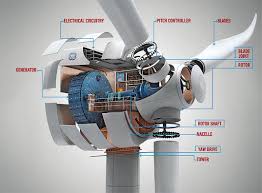
Event Horizon Solar & Wind supplies a range of wind generators and wind turbines from manufacturers such as Skystream and Whisper. The Skystream 3.7 wind generator is suitable for residential and small business power applications. An advantage of this model is that it can generate energy even in low wind conditions.

Skystream 3.7 Wind Generator

Skystream 3.7 Wind Generator

The Skystream 3.7 wind generator can be installed on towers with heights ranging from 33 feet to 110 feet. As this model can generate about 40 to 90% of the energy needs in a home, any excess is fed directly into the local grid. It has the capability to produce a continuous output of 1.9 kW with a peak output of 2.6kW. The Skystream 3.7 wind generator from Event Horizon Solar & Wind is connected to a 120 to 240 V AC universal inverter that aids in the process of grid feeding. The 3-blade construction of this model is built from fibreglass and rotates clockwise looking upwind.

With a rotor diameter of 12 feet, the Skystream 3.7 residential wind generator has an overall weight of 170 pounds. The rated speed of this model can range from 50 to 325 rotations per minute. The alternator, which is a part of the wind generator, is a slot-less permanent magnet. The maximum tip speed offered by the Skystream 3.7 wind generator from Event Horizon Solar & Wind is 216.5 feet per second.

Categories: Wind Generator Tags:

DeWind D6 Wind Generators from Composite Technology Corporation

January 26th, 2010 admin No comments

Composite Technology Corporation manufactures different models of DeWind generators. The DeWind D6 wind generator is available with two rotor diameters of 62 meters and 64 meters. This generator comprises three blades made of GFRP material, and these blades have a swept area of 3,019 square meters. The blade of the DeWind DE wind generator is available in two lengths of 30 meters and 31 meters. The blade with a length of 31 meters has a swept area of 3217 square meters. The metal receptor at the tip of the GFRP blade provides protection against lightning. The wind generator comprises a tower made of tubular steel. The elastomer elements in the drive of the wind turbine function as a sound balancing feature.

DeWind D6 Wind Generators

DeWind D6 Wind Generators

The DeWind D6 wind generator has a nominal wind speed of 12.5 meters per second, while the survival wind speed of the turbine is 55.3 meters per second. The cut-in and cut-out wind speed of the wind generator from Composite Technology Corporation are 2.8 meters per second and 25 meters per second respectively. It also has survival wind speeds of 48.9 meters per second and 50.5 meters per second. The rotational speed of the DeWind D6 wind turbine can be controlled with the help of active blade adjustment option. The DeWind D6 wind generator produces 1250 kilowatts of power.

The wind generator from Composite Technology Corporation has a three stage planetary spurwheel gearbox with two transmission ratios of 1:50.5 and 1:53.1. Some of the other features incorporated in this wind generator include meteorology sensors, an IGBT inverter, disc brakes and three hydraulic geared drives.

Categories: Wind Generator Tags:

Protecting Wind Turbines From Generator Failures

January 25th, 2010 admin No comments
The ring is designed for OEM installation or easy up-tower retrofit.

The ring is designed for OEM installation or easy up-tower retrofit.

Electro Static’s shaft grounding ring prevents damage by channeling harmful shaft currents away from bearings.

Mechanic Falls, ME – By safely channeling harmful shaft currents away from bearings to ground, Electro Static Technology’s new AEGIS WTG wind turbine grounding ring prevents bearing damage that could otherwise cause generator failure, unplanned downtime, costly repairs, and lost revenues.

Maintenance-free, effective at any RPM, and available for any size wind turbine generator, the ring is designed for OEM installation or easy up-tower retrofit.

High-frequency currents induced on the shafts of wind turbine generators can reach levels of 60 amps and 1200 volts or greater.
If not diverted, these currents will discharge through the generator’s bearings, causing severe electrical damage that results in bearing failure and catastrophic turbine failure, sometimes in as little as six months or less.

The AEGIS WTG’s patented conductive microfiber technology effectively steers these currents away from the bearings and safely to ground.

The WTG is engineered to safely divert up to 120 amps of continuous shaft current at frequencies as high as 13.5 MHz and discharge up to 3000 volts (peak). Ideal for use as part of a preventive maintenance program to protect against premature bearing failures, it can be installed whenever bearings are replaced.

Categories: Generator news, Wind Generator Tags:

Yo-Yo-Like Charger, YoGen Mini-Power Generator Charges Cell Phones Without a Power Cord

January 19th, 2010 admin No comments

What can you do if you are out of power and need to charge your cell phone?  There are battery boosters, and fuel cell rechargers and now a new device that cranks energy with a yo-yo-like string.

Fame - YoGen - 1

The YoGen handheld charger for portable electronics was launched at CES and received recognition as a “Best of CES 2010″ item by Gadget-Gurus.

The 100 percent green, fully-sustainable device that creates levels of charge sufficient to ensure sustained use when a battery runs down. YoGen Sells for $39.95 and could come in handy in cases of a disaster or just when you forget to charge you phone. It works with most cell phones including iPhones, USB devices and Bluetooth headsets.

YoGen can echarge any small-to-mid-sized personal electronics device by offering the industry’s leading ratio of energy output to input.

Through repeated pulls on an attached ripcord, similar to the motion of a Yo-Yo, YoGen’s internal alternator generates power in to charge everything from cell phones, iPods, PDAs and MP3s to Gameboys, GPS units, cameras and other devices. The alternator interfaces with an energy-efficient electronic stabilizer and transmission to transfer linear kinetic energy through a patch cord from the compact, ergonomically-designed unit to the electronic device.

Categories: Electrical generator Tags:

Generator maker sees used motor oil potential

January 19th, 2010 admin No comments
An engineer's sketch of the Cyclone Mark V external combustion engine.

An engineer's sketch of the Cyclone Mark V external combustion engine.

An inventor and a generator manufacturer have come up with a new use for used motor oil.

Cyclone Power Technologies signed a deal with Phoenix Power Group on Thursday to develop an external combustion engine that runs on waste oil. The deal signs over waste-oil-related rights to Cyclone’s Mark V external combustion engine to the Phoenix Power, which plans to use the engine in its new Phoenix 5-Series Generator.

“Cyclone still retains rights for the Mark V with other fuels,” a Cyclone representative noted in an e-mail. “Phoenix Power only holds exclusive rights for generators running on waste oil.” The representative noted that the Mark V “runs on all fuels–including biofuels like algae and orange peels.”

Cyclone Power Technologies is the company founded by Harry Schoell, an inventor of an improved version of the steam engine that Popular Science named an “Invention of the Year” in 2008 and also garnered an award from the Society of Automotive Engineers. A description and video of Schoell’s steam engine invention, which can run on “virtually any fuel” can be found in a Popular Science profile on him in 2008. At the time he said he was planning to offer it to lawnmower manufacturers. Now, it seems, a modified version of that original Cyclone Engine, the Cyclone Mark V, will be used in power generators.

“The P5S is expected to be the first power generator capable of utilizing waste oil products, such as used motor/equipment oil, to produce electricity for on-site operational requirements or as a power grid feed, ” Phoenix Power Group said in a statement.

There is a reason why the Phoenix Power Group is so keen on used oil.

The generator designer and manufacturer is a subsidiary of the Atlantic Systems Group, a Harrisonburg, Va.-based company that designs and builds automotive oil change and service stations. That’s obviously a group of people who think a lot about used oil and its problem as a potential contaminate to our water supply. As it’s been noted before in other articles on motor oil, the Environmental Protection Agency contends that dumping the waste oil from just one car’s oil change into the ground can contaminate up to 1 million gallons of fresh water.

Categories: Gasoline Generator Tags:

Generator noise blasts residents near B.C. Place

January 19th, 2010 admin No comments

generator-noise-blasts-residents-near-bc-placeLiving near B.C. Place has become a big pain in the ears for Ray and Lesley Appel. They used to enjoy living in their downtown apartment, but that was before three huge gas-powered generators appeared outside the downtown stadium that is the site for the opening ceremonies of the Winter Olympics Feb. 12.

One of the huge, noisy machines began running all night Friday, said Ray Appel.

“They started going 24/7,” he said Sunday. “It’s really, really loud. We have to keep our windows and doors closed. I have to wear earplugs at night. It’s just a loud, constant hum in the background.”

Appel, who lives about a block from the southwest corner of the stadium, chatted up a friendly security guard at the site.

“He said, ‘Only one of the generators is on now; if you think this is loud, wait until all three are running,’” said Appel, who works out of his home on the 29th floor. “He said they could have used baffles to keep the generators quiet, but they didn’t.”

Appel and his wife have filed a noise complaint with the city.

As if that isn’t enough, Appel said, the air pollution from the generators is “pretty potent” and belies the organizers’ promise to put on a green Olympics.

“When you stand near them you can barely breathe,” he said.

Categories: Generator news Tags:

How To Safely Operate A Generator

January 12th, 2010 admin No comments

generatorAll generators operate differently, so please consult the instructions that came with your model.
Powering Up Your Generator

* Check fuel level.
* If you must add fuel, be sure generator is cooled down.
* Do not over fill.
* Check oil level.
* Check filter.
* Check voltage selector to make sure it matches the type of application you are connecting to (CHOOSE BETWEEN ‘120-VOLTS AND ‘120-VOLT/240′).
* Move generator outside to well-ventilated area.
* Place on a firm, level surface.
* Connect a heavy duty, outdoor-rated power cord to generated, or connect appliances directly to generator to generator.
* Turn generator’s circuit breaker off.
* Turn power switch on.
* Pull cord.
* Let generator warm up before turning circuit breaker back on.

Gasoline
Some generators operate on unleaded gasoline. Others use diesel fuel. Five gallons of gas will power a 5,600 watt generator for about eight hours. One gallon of gas will power a 3,000 watt generator for about 3 1/2 hours.

Additional supplies
You will also need multi-gallon, vented containers for storing gasoline (fill before storm comes), engine oil, an outdoors-rated extension cord and a carbon-monoxide detector.

Caring for your generator

* Never over fill gas.
* Don’t use stale or contaminated gas.
* Avoid getting dirt or water in the fuel tank.
* Turn fuel valve off when transporting or storing generator. This keeps fuel from diluting engine oil and damaging engine.
* Run generator at least once a month. This lubricates the engine, recharges the battery and lets fresh gas through the carburetor.
* When storing a generator for more than two months, drain fuel and add fuel conditioner to top it off, following directions on the label.
* Change oil regularly, according to your model’s manual.
* Change filter regularly. according to your model’s manual.

Safety Tips

The risks (if you don’t do it right): carbon-monoxide poisoning, electrocution, fire and explosion.

* Never use wet hands to operate the generator. Never let water come in contact with the generator.
* Never run your generator in a garage because the carbon-moxide exhaust is toxic. Find a well-ventilated space with some cover, but be sure the generator isn’t positioned outside an open window. Use a battery-powered carbon monoxide detector. Always turn the engine off before refueling and let the generator cool.
* Don’t spill fuel. It can ignite.
* Store fuel and generator in a ventilated area and away from natural gas water heaters. Vapors can escape from closed cans and tanks, then travel to the pilot light and ignite.
* Never feed power from a portable generator into a wall outlet. This can kill linemen working to restore power. It also can damage your generator.
* Don’t use power cords that are frayed. This can cause a fire. Be sure all prongs are intact and that the cord is outdoor-rated. The cord’s wattage or amps must not be smaller than the sum of the connected appliance loads.

Shopping Tips

* Ask the dealer how many watts it will put out and for how long and how big a load it can handle.
* You could spend around $350 for a 2,400 watts model, $600 for an industrial-strength model. A television uses 300 watts; a freezer, 330; a water heater 3,000.
* Compare brands and models. Get manufacturer’s toll-free numbers for technical questions.
* Make sure you have the right cords and connectors or the generator will be useless. Consider an auxiliary fuel tank.
* Don’t fill fuel tanks until right before the storm. Stored fuel will grow stale and is unsafe in a hot garage.
* Most starters use rope pulls. If your use a battery, make sure it’s kept charged.
* Buy now, not after the storm. You’ll pay a lot less.

Categories: Diesel Generator Tags:

New portable electric generator

January 11th, 2010 admin No comments

new-portable-electric-generatorHorizon Fuel Cell Technologies developed a new product which was presented at CES Las Vegas, Nevada (Consumer Electronics Show).

The Singapore based Horizon fuel cell technologies is showing off the Hydrofill, a fuel cell system
designed for charging electronic gadgets at CES 2010.

The product will be released later this year and allows users to charge up their favourite mobile or small electronics with a hydrogen fuel cell.

The device extracts the hydrogen from water and stores it in special cartridges, which fit into the pocket size minipak. the minipak uses a USB port to charge everything from ipods and cameras to rechargeable batteries and GPS devices.

The process of turning water into hydrogen is very clean too, since its only produces water vapour as a result.

Horizon Fuel Cell Technologies, which first became known to the general public with an exclusive Gizmag story in 2006 about the company’s educational toy solar hydrogen car.
The Horizon toy cars quickly became the world’s largest volume-produced commercial fuel cell products and it is quite an irony that less than half a decade later, the company which launched with a toy car appears set to introduce genuinely disruptive technology into the home, finally enabling the long-touted futuristic vision of a hydrogen station in every home.

Categories: Electrical generator Tags:

Homemade Wind Generator

December 28th, 2009 admin No comments

What is a homemade wind generator?

Generally you could say that a wind generator is a machine that uses wind energy to produce electrical energy. It captures wind energy and converts it into mechanical energy that moves the blades of a motor to produce electrical energy. Wind generators help produce thousands of megawatts of electricity. They are also a very popular power solution for individual farms. They are ideal for large areas with good wind speed.

Setting up a home wind generator does not need professional help; individuals can easily set it up with the help of numerous guides available in the market. The components of a wind generator are also easily available in the market.

How does a wind generator differ from a windmill or wind turbine?

Wind generators have been in use for a long time in the form of windmills or wind turbines. Years ago, when electricity was not invented, wind turbines were used to pull boats and pump out water.

Even now, the terms, wind generator, windmill, and wind turbine are used to refer to the same device.

What are the advantages of using a wind generator?

The advantages of a wind generator are many. Let’s look at a few of them.

Environment-friendly: Wind generators prove to be environment-friendly in two ways:

  • They do not emit harmful gases in the atmosphere nor do they leave any harmful residual component.
  • They do not use any fuel to produce electricity, thereby helping the cause of the environment.

Power-saver: Wind generators are an alternative power solution. They do not use any non-renewable sources of energy, thus helping in times of energy crisis.

Economical: Though the initial cost of setting up a wind generator seems high, the cost of generating electricity in the long run becomes nil. So, you will be getting electricity absolutely free after a few years.

Independent option: Wind generators do away with the dependence on power plants and the government for electricity. With a wind generator in your land, you have your own power plant for life.

24/7 power: With wind generators, you can say bye to power outages forever. You will get continuous, uninterrupted power supply for your entire house and land.

Power storage: A homemade wind generator also allows you to store power for use later. This feature makes it an amazingly lucrative power solution.

If you want to help the world and fight the current energy crisis, invest in a wind generator.

Categories: Wind Generator Tags:

How to Choose a Portable Generator for Your RV

December 28th, 2009 admin No comments

generatorWhether you own an RV, or intend to buy one soon, you will need a reliable source of power for your travels. Portable generators provide an economical and effective solution to your electric power needs, on the road or at the campsite.

For many people though, purchasing a power generator can be an intimidating and confusing process. Here’s how to choose the right one for your power needs.

First, you need to determine the size of the generator for your RV by knowing how much power you will use. This will narrow down the choices you have when selecting a portable generator.

Start by surveying your RV for appliances that run on 120 volts. The TV, microwave and other kitchen appliances generally require the most power but smaller appliances can add up. Most RV lights are 12 volt but some may be 120 volt. Your RV air conditioner is the biggest power user.

Next, add up the power requirements, in watts, for all the devices that you are likely to operate at the same time. Wattage ratings are printed on light bulbs; other devices like hair dryers and electric heaters are also described by their wattage requirements. If the device doesn’t provide a wattage requirement, you can determine watts by multiplying volts times amps.

Be aware that some electrical devices have starting wattage requirements that are larger than the running watts, like the air conditioner. If so, use the starting wattage requirement for the largest of the devices you want to run and the running watts for all other devices. This is the minimum wattage you will need from a generator.

Now that you have determined your power needs, it’s time to look at the type of generator that will fit the bill.

There are two types of portable generators: contractor and RV. Contractor generators are generally inexpensive, very noisy, and not suitable for an otherwise quiet campground. RV generators are purpose-built, providing quiet, reliable power that your camping neighbors will thank you for. They are expensive but are well worth it in the long run.

There are a wide range of portable RV-type generators, with each manufacturer having a wide range of noise levels. Honda, Yamaha, and Kipor (see Resources section below) all make super-quiet portable generators. Match up your power requirements with the model that has the lowest decibel (a measure of how loud we hear noise) level.

Starting options for portable generators are either pull start, like your lawn mower, or electric start using a key. Generally speaking, electric start generators are available in the 3000 watt range and larger. If you have a bad back or just want the convenience, shop for the larger wattage generators.

There is even a wireless remote option that can be retrofitted to most electric start generators. It’s costly but can be very convenient if you don’t want to get out of bed, go outside, and turn off the generator.

Consider how long you will run your generator. Some portable generators have small fuel tanks, less than 1 gallon, while others have much larger ones, up to 5 gallons. Generally speaking, the larger the power output from the generator, the larger the fuel tank capacity. There are options though to add additional fuel capacity.

Think about how you will transport your generator. Larger generators weigh a lot, up to 175 lbs. with fuel. You can transport it in the back of your truck so be ensure to get the optional wheel kit for the generator and use ramps to make it easier to roll the generator in to the back of the truck.

If you have an SUV tow vehicle, you can have a platform built on the back of your RV to carry the generator. Never transport your generator in the back of your SUV. Gas fumes are explosive and in the event of a fender bender, you don’t want a 100 lb. chunk of metal flying in to the passenger area.